Whether you want to learn the fundamentals of SEO, improve your content, or better optimize your WordPress site, our free resources help you capitalize on your search potential.
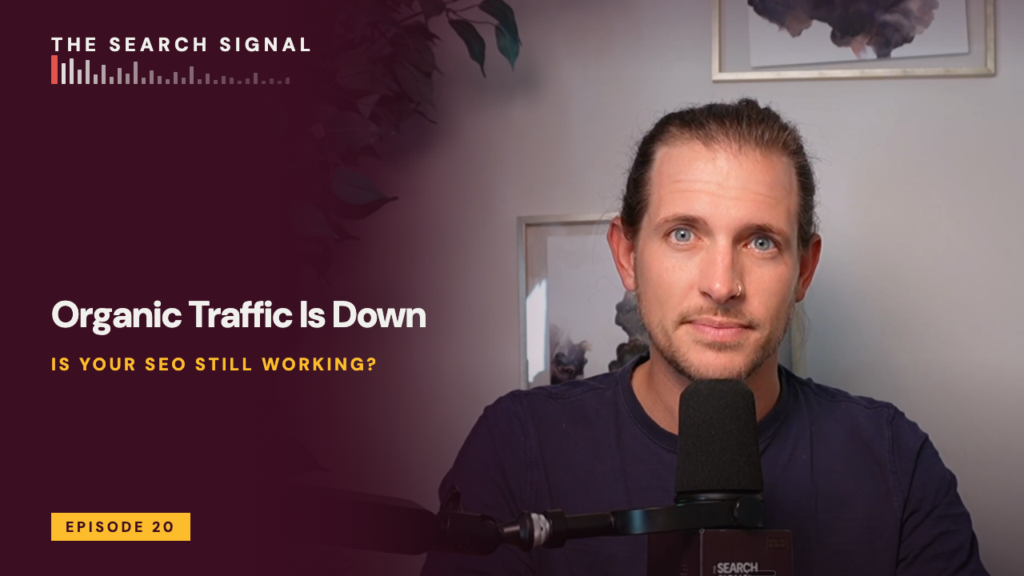
If organic traffic is down this quarter, that doesn’t mean a site’s SEO program stopped working. In this episode of The Search Signal, Michael Transon makes the case that search is behaving more like a brand channel than a performance channel, with searches ending without a click and the tools used to measure visibility both getting less reliable at the same time. He lays out how to read rankings, AI mentions, and direct traffic together instead of relying on one traffic number to prove the program is working.
AI overviews have increased zero-click searches, making visibility critical for brand awareness. Make sure you appear for important queries in your industry with an AI overview optimization strategy.
Schema tells AI systems who you are. It doesn't tell them what you're known for, and that's the gap where most AEO strategies stall. Building genuine entity authority means working across three distinct layers: structured data, topical content depth, and...
Want your website to be a go-to source for your audience? Struggling to get your pages to rank higher in search results or get cited in AI overviews? Building topical authority could be the answer. Below, I share how to...
Google Search Console is a helpful tool that not only shows you how often your pages appear in search and for what queries. It also allows you to monitor how Google views your site. The Pages index report covers issues...
Your website is visible in search results and your marketing and advertising campaigns are in motion — but do you know how many visitors are coming to your site? Read on to learn how to measure website traffic, what insights...
In SEO, search intent is a deceptively simple concept that can power up your search efforts when you put it to good use. If keyword research answers the question of “what” potential customers are searching for, search intent answers the...
The jobs-to-be-done framework presents a different way to approach SEO content that better aligns with AI search.
Feeling torn between SEO and GEO? Think you could be falling behind as others start to optimize for AI search engines? Keep reading before making changes to your SEO strategy.
The hub and spoke content model provides an organizational structure to help mold your content creation and help you publish related pieces. If your current content isn’t yielding results, switching to a hub and spoke model may put you back...
If your website serves a global community, you’ll want to use hreflang tags to help search engines deliver localized content for all of your users.
Technical SEO metrics show whether search engines can find, crawl, and index your pages. Learn which four to track, what a passing Core Web Vitals score looks like, and where to read each number in Google's free tools.
Product schema turns your product pages into eligible rich snippets showing price, availability, and ratings straight in search results. This guide walks through JSON-LD implementation step by step, including shipping and return-policy schema, a required-versus-recommended property table, and three ready-to-use...
You’ve probably heard a lot about domain authority, but maybe you’re not sure exactly what domain ranking is and how page authority compares to website domain authority. If you’re wondering why it matters for SEO, read on to learn more...
Comparing Google Analytics vs. Google Search Console? Learn which tool can help you better understand your website visitors and provide more insight into your digital marketing.
Concerned about how quickly your web pages are loading? Not sure how to best measure page speed? Read on to learn more about two important page speed tools: Google PageSpeed Insights and Google Lighthouse. I’ll share how they gather data,...
From insightful strategies to tangible impact, our unique method sets the stage for search success.
Victorious’s Q3 2026 AI search report tracked which brands AI platforms name when buyers ask who to choose. Brands AI had already cited while buyers were researching the category got named 94% of the time, against 50% for brands with no early citation. Watch to learn what that means for research content and whether mentions or links do more to get a brand named.
By
Michael Transon
Feeling torn between SEO and GEO? Think you could be falling behind as others start to optimize for AI search engines? Keep reading before making changes to your SEO strategy.
By
Jason White
If your website serves a global community, you’ll want to use hreflang tags to help search engines deliver localized content for all of your users.
By
Jason White
Google released Universal Cart right before the busy holiday season, leaving ecommerce brands wondering how it will affect them. Watch to learn how Universal Cart works, who it matters for, and what you can do today to get set up on it.
By
Michael Transon
The hub and spoke content model provides an organizational structure to help mold your content creation and help you publish related pieces. If your current content isn’t yielding results, switching to a hub and spoke model may put you back on track to secure Google’s top spots. Keep reading to learn more about this strategy.
By
Tania Brown
Technical SEO metrics show whether search engines can find, crawl, and index your pages. Learn which four to track, what a passing Core Web Vitals score looks like, and where to read each number in Google's free tools.
By
Jason White
Anthropic updated its usage policy to ban using Claude to build networks of fake sources that sway search results and AI answers. The rule takes effect November 12 and reaches every product built on Claude. Michael walks through why he reads this as good news, how the case that prompted it got caught, where faking still works, and what to build instead.
By
Michael Transon
Calculate your Black Friday SEO lead time with one formula instead of a guess, then build evergreen holiday landing pages that earn backlinks and AI Overview citations year after year. Five tactics, starting with the exact math for your own start date.
By
Jason White
Briefing content for writers used to be straightforward. You’d take a look at the SERP, determine an angle for your content, and provide headers, reference links, and a ballpark word count. That’s a solid approach for creating click-worthy content for human readers. But AI retrieval systems don’t “read” content like humans do. If you want your content to surface in AI-powered search results, you need to update your briefing process. Why Content Briefs Need To Change for AI retrieval Think...
By
Jenny Hart
A lot of AI search advice still centers on a company's own website: fix the technical setup and publish better content, and visibility will follow. But when ChatGPT or Google's AI Mode answers a question about a category, it builds its answer mostly from other people's pages. In this episode, Michael Transon makes the case that a deliberate brand mention program, not a stronger website, drives AI search visibility. Watch to learn why expertise and co-occurrence have to come first,...
By
Michael Transon