A Victorious Podcast
A weekly show for marketing leaders who want to understand how AI is changing search and what it means for their brand.
Listen on

Each episode, Victorious founder and CEO Michael Transon picks one development, like a new Google feature or a change in how AI platforms cite sources, and walks through what it means for your brand and what he’d do if he were in your seat.
One topic per episode means you can sharpen your search strategy in the time it takes to grab lunch.
Michael’s takes come from Victorious’s original research and what our team sees across hundreds of campaigns.
Every episode ends with a recommendation you can take to your team, whether that’s a quick fix or a question to raise with leadership.
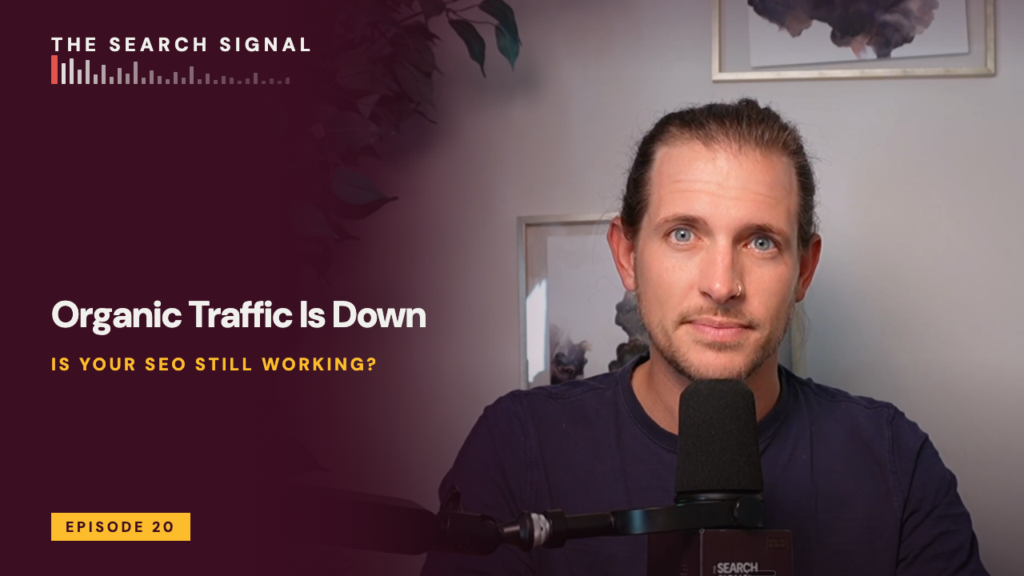
If organic traffic is down this quarter, that doesn't mean a site's SEO program stopped working. In this episode of The Search Signal, Michael Transon makes the case that search is behaving more like a brand channel than a performance channel, with searches ending without a click and the tools used to measure visibility both getting less reliable at the same time. He lays out how to read rankings, AI mentions, and direct traffic together instead of relying on one traffic number to prove the program is working.
Meet the host
Founder & CEO, Victorious
Michael Transon has worked in SEO for about 15 years. He founded Victorious in 2013 as a solo consultant and has since grown it into a five-time SEO Agency of the Year working with some of the world’s most recognizable brands.
Michael believes AI search rewards the same work that has always built strong brands. He speaks and writes about the factors that influence AI visibility and how marketers can act on them.
SUBSCRIBE TO THE SEARCH SIGNAL
New episodes every week. Follow the show in your podcast app, or watch on YouTube.
The need for a full funnel search strategy doesn't go out the window because of AI search. In this episode, Michaels lays out the foundation for what an integrated AEO and SEO strategy should look like.
Google is rebuilding search around AI Mode, and in this episode, Michael Transon makes the case that it will become the default way people search. Listen as he walks through the evidence, from the rapid spread of AI Overviews to the rise of zero-click results, and explains why AI Mode's modest adoption numbers understate what's coming. Plus, get practical tips for how to update your strategy so you can stay visible on every Google surface.
ChatGPT, Claude, Gemini, Perplexity, and Google's AI surfaces all arrived at practically the same time, so most marketers built one AI search strategy to cover them all. This week, Michael makes the case that these platforms have grown too different for a single playbook and walks through how to decide which ones deserve a dedicated strategy.
Marketing budgets have dropped to less than 8% of company revenue, roughly 18% below where they sat four years ago, and the AI line item inside those smaller budgets keeps climbing. Put those two numbers next to each other and one move looks obvious: hand the search work to AI, stop paying for the people, and bank the difference.
Many AI search plans rest on a comforting assumption: teach the model what you do, describe yourself clearly enough, and the recommendations will follow. It feels right, and it's shaping how a lot of marketing budgets get spent. In this episode, we share what happened when we tested this assumption.
There's a version of your brand that lives only inside AI answers, and you probably didn't write it. When a buyer asks ChatGPT or Gemini about your company, the description they get back is assembled from sources scattered across the web, and a lot of them are places you've never touched. Sometimes that description flatters you. Sometimes it's wrong in a way that quietly costs you the deal before anyone on your team picks up the phone.
Most marketers treat AI search as a black box that either likes their brand or doesn't. It isn't. Behind every answer an AI gives about you sit two very different machines, one that talks and one that knows, and they behave in ways you can actually reason about once you've seen how each was built. Learn more about the history of AI search in this week's episode.
Most AI-driven visits land in your analytics as direct traffic with no source label, which means your current reporting can't tell you whether your brand is showing up in ChatGPT, Perplexity, or Google's AI answers. This episode breaks down why that gap exists and shares how to build the measurement layer that actually captures it.
The buyers who arrive at your site from AI are further along in their decision than almost any other traffic source. Getting in front of them takes a different kind of work than ranking in traditional search, and that work is cheaper to do now than it's likely to be later.
In this debut episode of The Search Signal, Michael Transon cuts through the acronym soup to show what the data actually says, where this confusion is coming from, and what it means for how you should be allocating your search marketing budget right now.